
- /
The Balancing Act: Exploring the Convergence of Mortgage Rates and Rental Prices
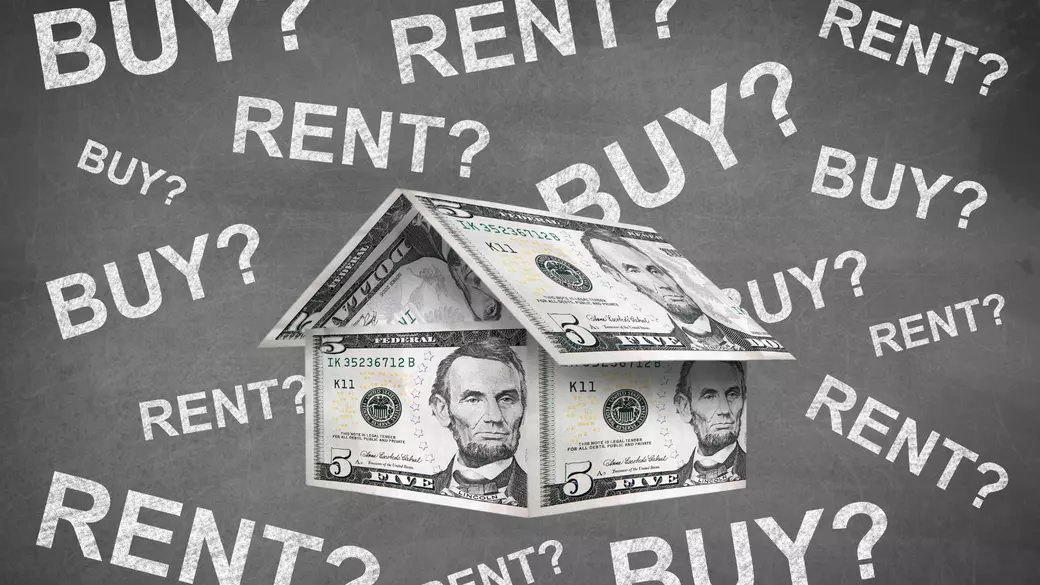
The age-old debate of whether to rent or buy a home has been a topic of contemplation for generations. Traditionally, the allure of homeownership has stemmed from its potential for long-term financial stability and investment. However, in recent years, a significant shift has been observed as the rate at which mortgages are catching up to rental prices is altering the landscape of the real estate market. This shift prompts us to ask: Is there a tipping point where renting becomes more cost-effective than buying? In this blog post, we'll delve into this phenomenon and explore the factors that are contributing to this trend.
The Changing Dynamics
Historically, the conventional wisdom has suggested that homeownership is a sound investment, allowing individuals to build equity and attain a sense of stability. However, recent trends have shown that the correlation between mortgage rates and rental prices is becoming increasingly intertwined, leading to a potential rebalancing of the rent-buy equation.
One of the driving factors behind this change is the fluctuation in mortgage interest rates. When mortgage rates are low, the cost of borrowing decreases, making homeownership more accessible. Conversely, when mortgage rates rise, the cost of purchasing a home increases, potentially tipping the scales in favor of renting. At the same time, rental prices have been influenced by various economic factors, including supply and demand dynamics and the overall health of the housing market.
Factors Influencing the Convergence
- Mortgage Rates: As mentioned earlier, mortgage rates play a pivotal role in shaping the rent-buy equation. When mortgage rates are low, prospective buyers may find it advantageous to lock in a fixed-rate mortgage. However, if rates rise substantially, the affordability of homeownership diminishes, making renting a more attractive option.
- Rental Market Conditions: The demand for rental properties and the supply of available units directly impact rental prices. In competitive rental markets, prices can rise, making homeownership appear more appealing. Conversely, in markets with excess supply, rental prices may stagnate or even decline, reducing the urgency to buy.
- Economic Uncertainty: Economic factors such as job stability, inflation, and overall economic uncertainty can influence individuals' decisions between renting and buying. During periods of uncertainty, some may opt for renting to maintain flexibility and avoid the potential risks associated with homeownership.
- Location: The old adage "location, location, location" still holds true. In some areas, buying a home might be more affordable than renting due to lower housing costs. Conversely, in high-demand urban centers, rental prices can surpass mortgage payments, pushing individuals to rent for financial reasons.
- Opportunity Costs: The financial benefits of homeownership, such as building equity, need to be weighed against potential opportunity costs. For example, if one's investment capital could yield better returns elsewhere, renting might be the more prudent choice.
The Tipping Point
The convergence of mortgage rates and rental prices brings us to the key question: Is there a tipping point where renting becomes more cost-effective than buying? The answer isn't a simple one, as it depends on individual circumstances, financial goals, and market conditions. A comprehensive analysis of factors such as expected tenure, potential appreciation, tax implications, and personal financial stability is crucial when making this decision.
The evolving dynamics of the real estate market have led to a fascinating shift in the balance between renting and buying. As mortgage rates and rental prices continue to intertwine, the decision of whether to rent or buy a home becomes increasingly nuanced. There may indeed be instances where renting becomes a more financially sound choice than buying, but the ultimate decision will depend on a careful evaluation of personal circumstances and market conditions. As prospective homebuyers and renters weigh their options, one thing remains clear: the age-old decision-making process of renting versus buying is evolving in tandem with the ever-changing real estate landscape.

GL Realty Group LLC
985-308-1460 glrealtygroup@gmail.com
951 Paul Maillard Rd Luling, LA & 5001 Hwy 190 Bld.D Suite 2-1 Covington, LA
Conveniently located on the Southshore and Northshore, Louisiana
Licensed by the Louisiana Real Estate Commission
Categories
- All Blogs (57)
- Bayou (1)
- Boat Access (2)
- brokerage (15)
- business (1)
- Buyer (32)
- CMA (1)
- Commercial Real Estate (3)
- Development Opportunity (1)
- first time homebuyer (26)
- Flip House (4)
- Flood (3)
- Flood Insurance (6)
- foreclosure (1)
- Harahan, LA (1)
- Highest Price (6)
- HOA (1)
- home (38)
- Homeowners Insurance (6)
- homeownership (39)
- hurricane season (1)
- Insurance (4)
- Interior design (8)
- Investor (14)
- Land for Sale (3)
- landscaping (4)
- Loan Officer (2)
- Louisiana (33)
- Monthly Payment (2)
- Mortgage (10)
- New Construction (10)
- New Orleans (1)
- Northshore (11)
- Property Management (4)
- Real Estate (37)
- Real Estate Agent (11)
- Real Estate Brokerage (16)
- realtor (11)
- Renovations (3)
- rentals (5)
- Residential Real Estate (24)
- retail (1)
- River Road (1)
- Seller (14)
- Short Sale (1)
- Southshore (18)
- Subdivision (3)
- swimming pool (4)
- Vacant Land (1)
- Vacation rental (1)
- valuations (2)
- Water Community (2)
- Waterfront (2)
- Wetland (1)
- Wooded Land (1)
- Zestimate (1)
- Zillow (1)
Recent Posts






Broker, REALTOR® License ID: 0995692370
+1(985) 308-1460 | glrealtygroup@gmail.com